About This Tour
Balochistan covers nearly half of Pakistan's total land area and is home to fewer than 5% of its population. It is the country's most geologically dramatic province — a vast, ancient landscape of eroded canyons, extinct volcanoes, mud calderas, coastal cliffs and juniper-forested highlands that most Pakistanis have never visited and most of the world does not know exists. That is precisely what makes it worth going to now, before everyone else arrives.
The Makran Coastal Highway alone is one of the great drives in Asia — 653km of road hugging the Arabian Sea coast from Karachi to Gwadar, passing the Princess of Hope rock formation, the mud volcanoes of Chandragup near Hingol, the ancient ruins of Kund Malir and some of the most deserted beaches on the planet. Combine it with Quetta, the Bolan Pass and the juniper forests of Ziarat and you have one of the most varied and surprising itineraries in the country. All tours depart from Lahore.
Tour Highlights
Princess of Hope
A 24-metre natural rock formation on the Makran Coast shaped by millennia of wind and sea erosion — one of Pakistan's most striking natural sculptures.
Kund Malir Beach
A wild, undeveloped beach on the Makran coast with turquoise water, golden cliffs and almost no crowds. One of Pakistan's finest coastlines.
Chandragup Mud Volcanoes
Sacred mud volcanoes near Hingol National Park that bubble continuously, considered holy by local Hindu communities making annual pilgrimages.
Quetta & Bolan Pass
The provincial capital surrounded by fruit orchards and the historic Bolan Pass — the ancient gateway between Central Asia and the subcontinent.
Ziarat Juniper Forest
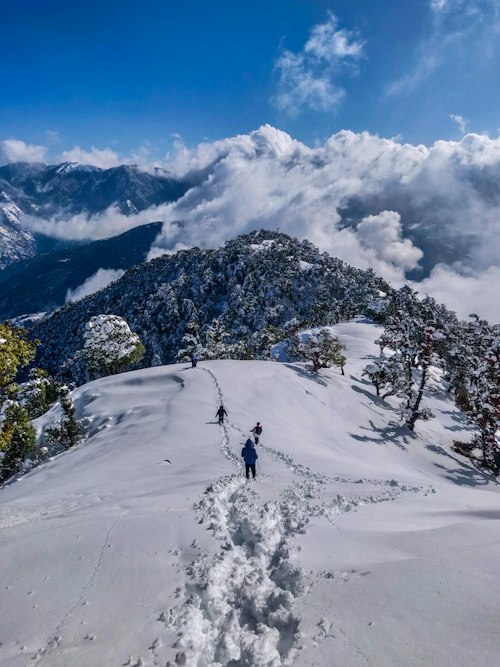
One of the world's oldest and largest juniper forests at 2,400m, surrounding the hill station of Ziarat with trees over 5,000 years old.
Hingol National Park
Pakistan's largest national park covering 6,100 sq km of coastline, desert and mountains, home to crocodiles, rare birds and the Sphinx of Balochistan rock formation.
Day-by-Day Itinerary
We fly from Lahore to Karachi (1.5 hours), the starting point for the Makran Coastal Highway. An evening in Karachi — dinner by the sea at Clifton Beach — before the coastal drive begins tomorrow.
- Fly Lahore to Karachi
- Check-in and rest
- Evening at Clifton Beach
- Overnight: Karachi
We hit the Makran Coastal Highway heading west. The road is excellent and the scenery builds as the cliffs of the Makran range begin to rise from the sea. We stop at Las Bela and reach the wild beach camp at Kund Malir by late afternoon — turquoise water, golden cliffs, complete isolation.
- Depart Karachi on the Makran Coastal Highway
- Las Bela stop
- Arrival Kund Malir beach
- Beach camp overnight or Ormara guesthouse
A day inside Hingol National Park, Pakistan's largest. We visit the famous Sphinx and Princess of Hope rock formations in the morning before heading to Chandragup — the sacred mud volcano site where bubbling grey mud rises continuously from the earth and pilgrims trek from Gujarat each year.
- Hingol National Park exploration
- Princess of Hope rock formation
- Sphinx of Balochistan viewpoint
- Chandragup mud volcanoes
Gwadar is Pakistan's deep-sea port city at the western end of the Makran coast. A rest day here with time to explore the fishing harbour, visit the waterfront and see the dramatic headland jutting into the Arabian Sea. Sunset from Gwadar's clifftops is memorable.
- Morning at Gwadar fishing harbour
- Gwadar headland and clifftop views
- Afternoon rest
- Sunset over the Arabian Sea
We fly from Gwadar to Quetta (the provincial capital at 1,680m) or drive through the heart of Balochistan — an extraordinary landscape of red rock, dry valleys and scattered villages. Quetta is a cool, orchard-filled city with excellent fruit bazaars and the famous Hazarganji Chiltan National Park nearby.
- Fly or drive Gwadar to Quetta
- Arrival and hotel check-in
- Quetta fruit bazaar evening walk
- Overnight: Quetta
A full day from Quetta. Morning drive through the historic Bolan Pass — the ancient gateway used by Alexander the Great and Mughal emperors — before heading to Ziarat, the hill station at 2,400m surrounded by one of the world's oldest juniper forests. Trees here are over 5,000 years old.
- Bolan Pass drive — ancient Silk Road gateway
- Ziarat hill station
- Juniper forest walk — trees over 5,000 years old
- Return to Quetta or overnight Ziarat
A morning flight from Quetta back to Lahore (1.5 hours). Tour ends on arrival.
- Quetta to Lahore domestic flight
- Arrival Lahore
- Tour complete
What's Included & Excluded
✓ Included
- ✓ All transport within Balochistan
- ✓ Domestic flights Lahore–Karachi and Gwadar–Quetta and Quetta–Lahore
- ✓ 5–7 nights accommodation
- ✓ Daily breakfast and selected meals
- ✓ Experienced guide familiar with Balochistan
- ✓ Hingol National Park entry
- ✓ Beach camping equipment where used
- ✓ 24/7 WhatsApp support throughout
✗ Not Included
- ✗ International flights
- ✗ Travel insurance (strongly recommended)
- ✗ Visa if not Pakistani national
- ✗ Lunches on driving days
- ✗ Personal shopping
- ✗ Tips for guide and driver
Photo Gallery

Book This Tour
Private & fully customised • Departs Lahore
No payment now. We reply within 2 hours.